768 Worms
On mothering a baby robin named Chip

Mother robins must be exhausted. We fed Chip 3 worms every hour from 5:00 AM to 9:00 PM for 16 days. That’s 768 worms for 1 bird. Imagine the reality of a mother robin who has 5 eggs that hatch into bottomless pits like the robin we fed! That would be 768 x 5, which is 3,840 worms, for just over 2 weeks.
Those numbers do not account for the worms eaten before we found Chip lying on the cold morning grass, lethargic and shivering with a bloody cut on his/her beak. (We don’t actually know what sex Chip is. But we keep referring to Chip as a “he” for no reason in particular.)
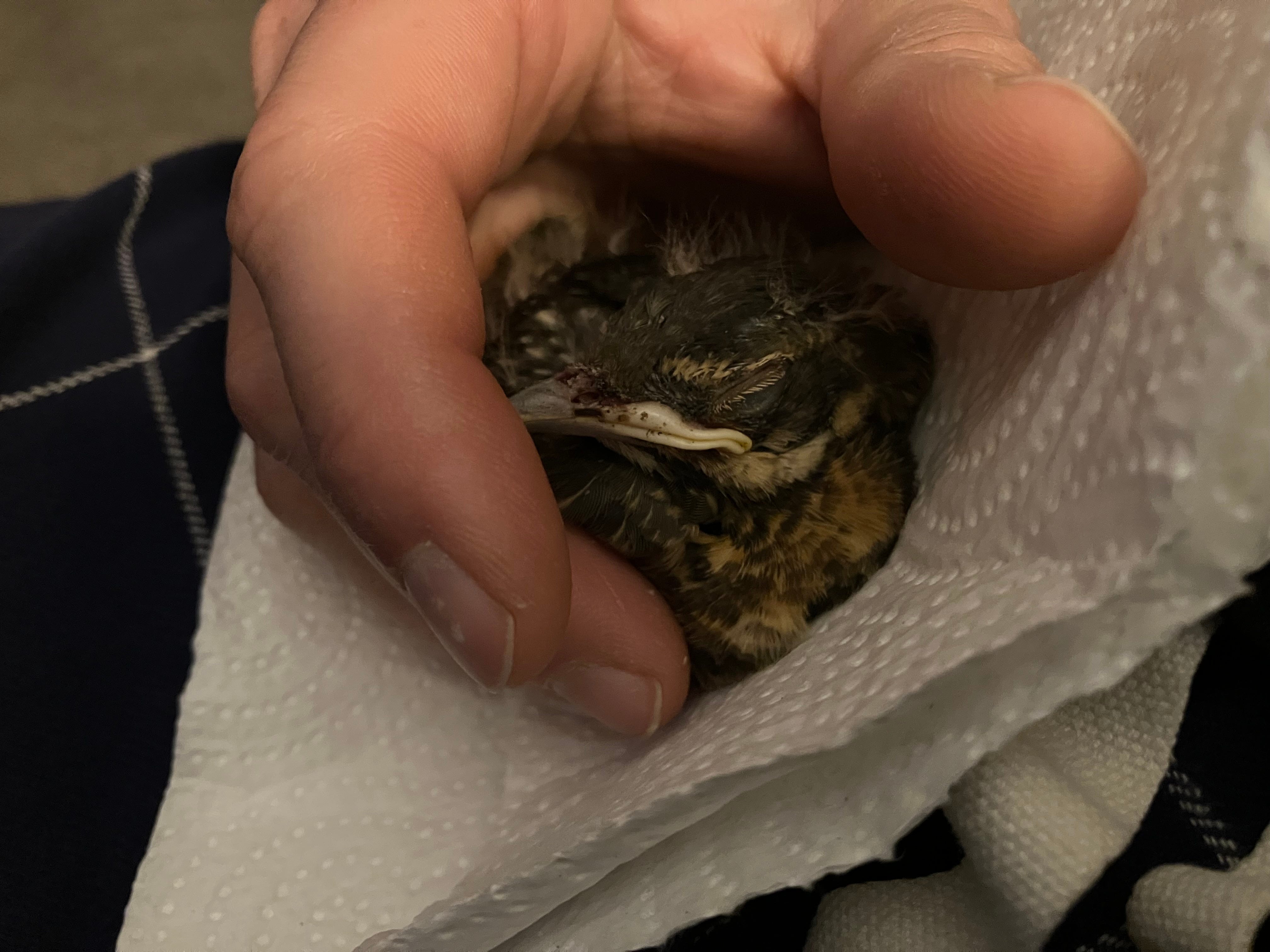
I am a pragmatic, rural farm girl, and I am not lacking in knowledge of how fledgling birds grow into adulthood. Every spring there are small fluffy birds squeaking for worms and their mothers in the yard. Some of them make it and some do not and it’s just the way the animal kingdom works.
This spring has been no different. While we were planning to garden on this particular day, I saw this little, helpless fluff ball in the grass next to its deceased sibling. Something had happened to these robins and there I was, able to help. So I did. First we looked around for the nest - then the mother. When neither appeared we were galvanized into action. This bird was not going to make it without help.
Having some experience with helpless chicks from last summer, I immediately decided this little one needed a boost of energy to help it eat something. I had a chick last year in the same plight, and out of desperation I followed some homesteading advice I gleaned from a quick internet search. “Mix a drop of molasses with room temperature water and gently wet the chick’s beak with a drop from the mixture”. This little nudge from the sugar was enough to reanimate the chick and perk it up enough to eat and regain its strength. It worked like a charm last summer and it worked with Chip.
Soon Chip was squeaking for worms. A lot of worms. Like, way more than we could dig. Like, we had to run to the bait store and buy 6 or 7 plastic containers every few days, amounts of worms.
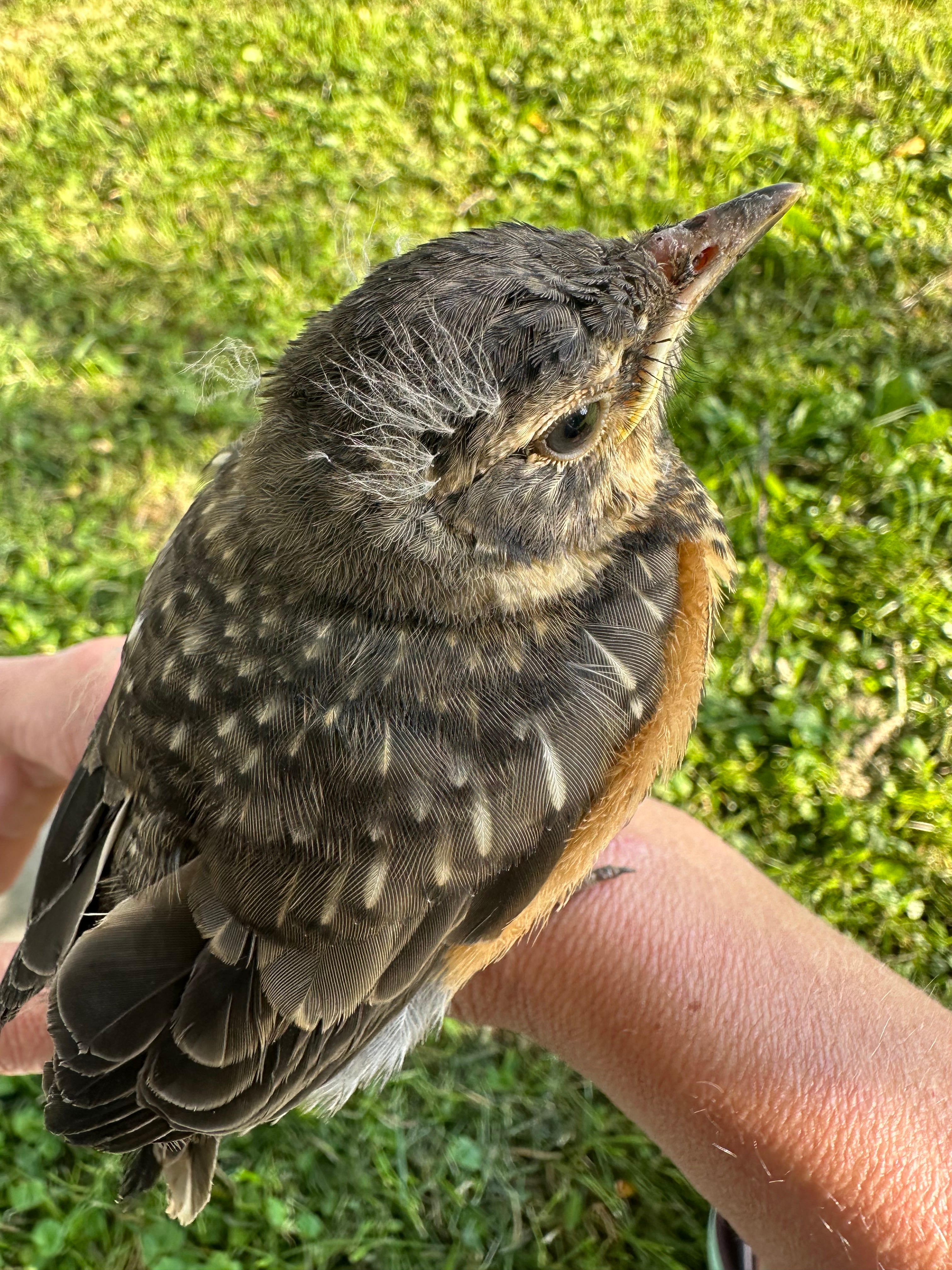
Pretty soon Chip was flapping around and his fuzz was becoming feathers. We fed him easily close to 1,000 worms and he grew very quickly.
We took Chip outside to let the wind ruffle his feathers and remind him that he was wild at heart. It felt good to see him outside content to look around and perch on our arms. Once he flew into a big Maple tree in the farm yard and Tara had to use a ladder to grab him and bring him back down with his two-legged mothers.
Soon we were wondering how to transition him from being a house baby to an outside fledgling. How could we support Chip outside? Neither of us could climb trees to try and find him. So we kept him in my office in the house until he seemed capable of flying well.
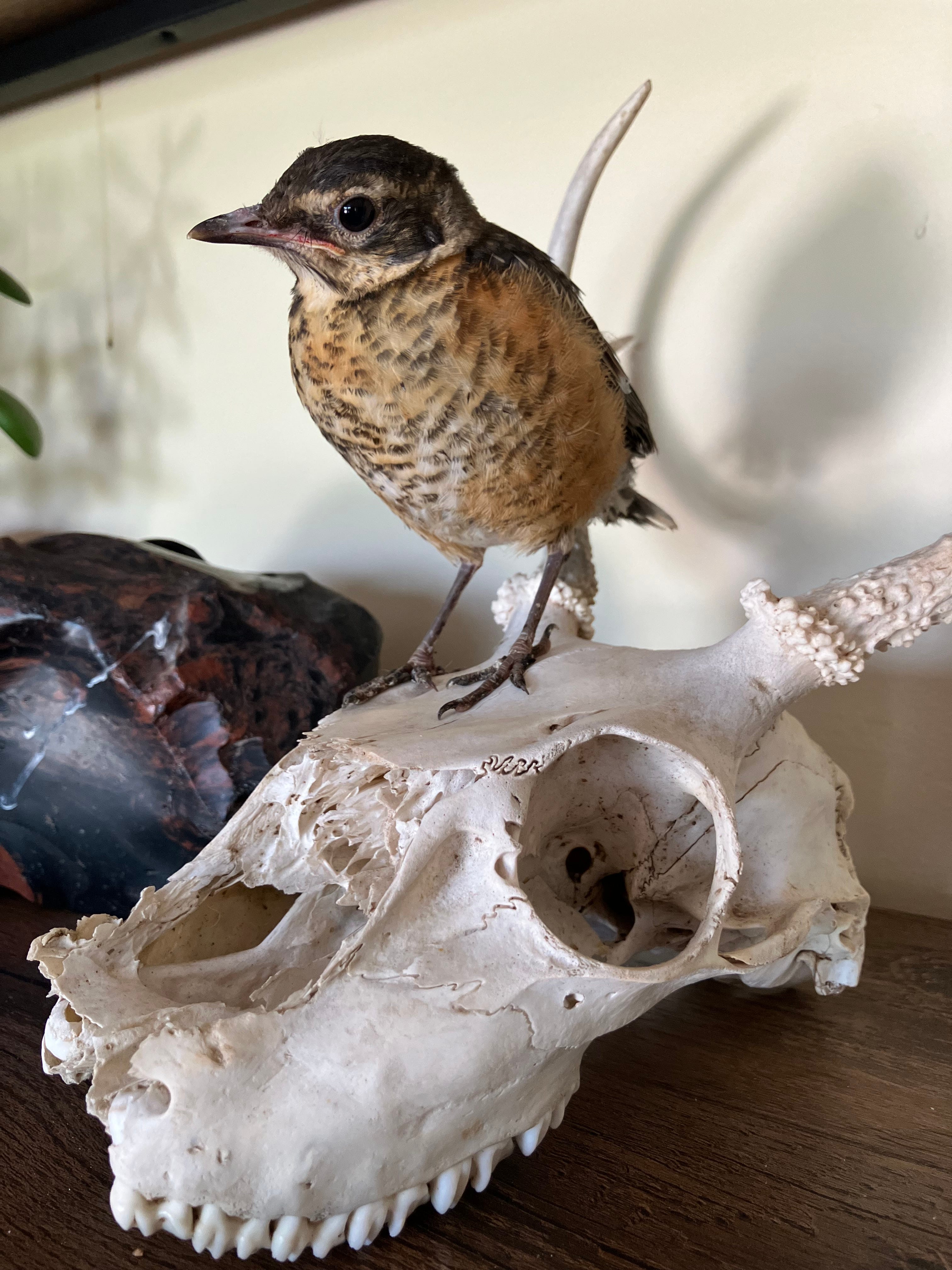
We worried that his bizarre rearing would set him up to be dependent on us, which was not at all what we wanted or were prepared to do. Can you imagine feeding a robin worms for the rest of its life? Not only that, but having to keep it safe amongst the motley crew of other animals on the farm? Chickens, dogs, a cat, cows… and then obviously any wild animals he might encounter…
We had a lot to consider. We have a local vet that will accept abandoned and injured birds and send them to the Avian Conservation Center of Appalachia to be reared until ready to re-enter the wild. We considered taking him there, but ultimately decided to convert our dog kennel into a makeshift Aviary for Chip while he was learning how to feed himself.
The first day we placed a cookie tray on the grass of the kennel with some delicious red worms and mealworms, and after we left his view, watched his behavior with binoculars. Success!! Chip hopped down from his perch and gobbled up the worms.
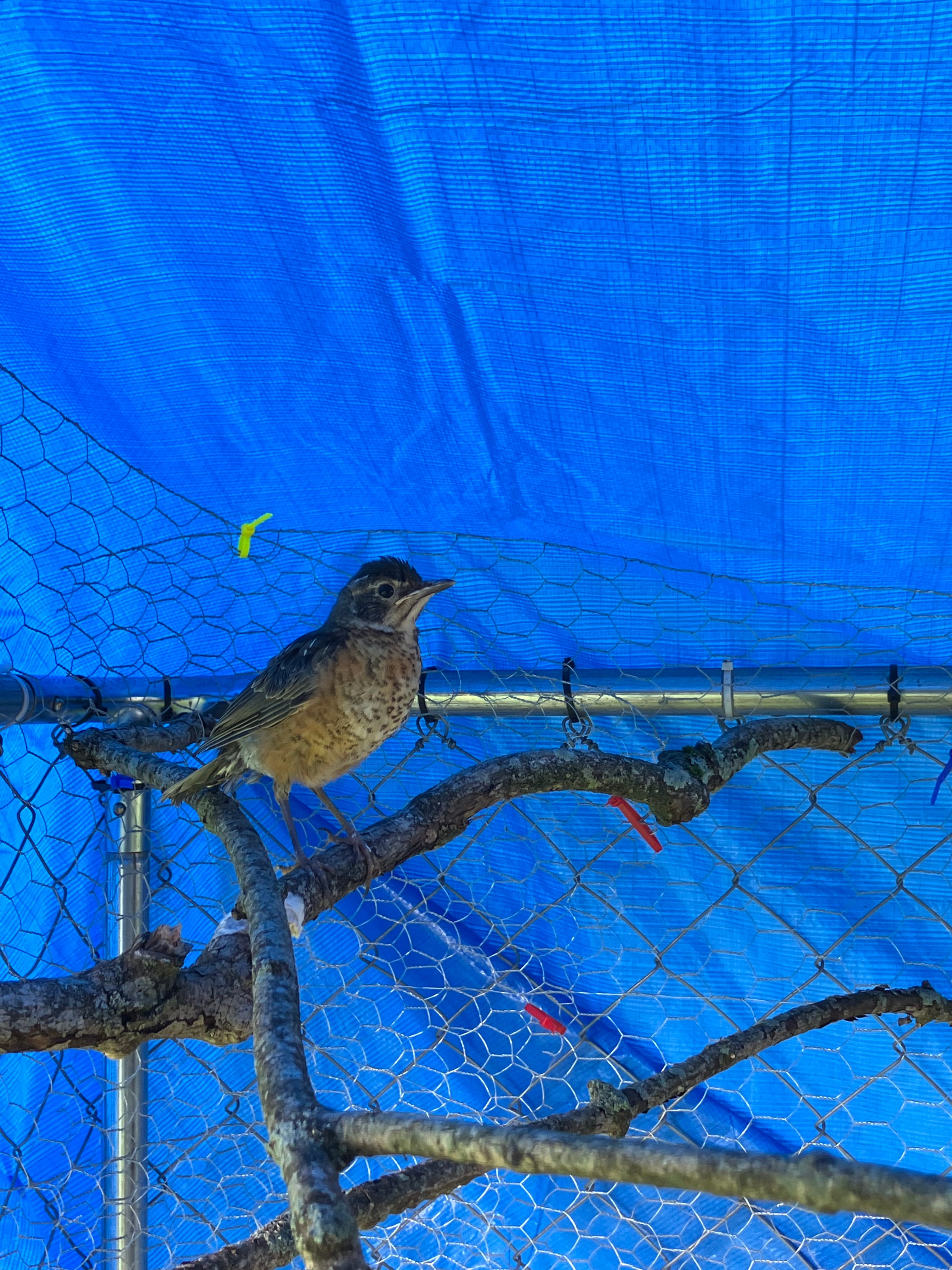
After witnessing this behavior over and over, we were satisfied that he would be able to hunt and after only a few days, we decided to let him outside to forage and fly and do his good work as a robin.
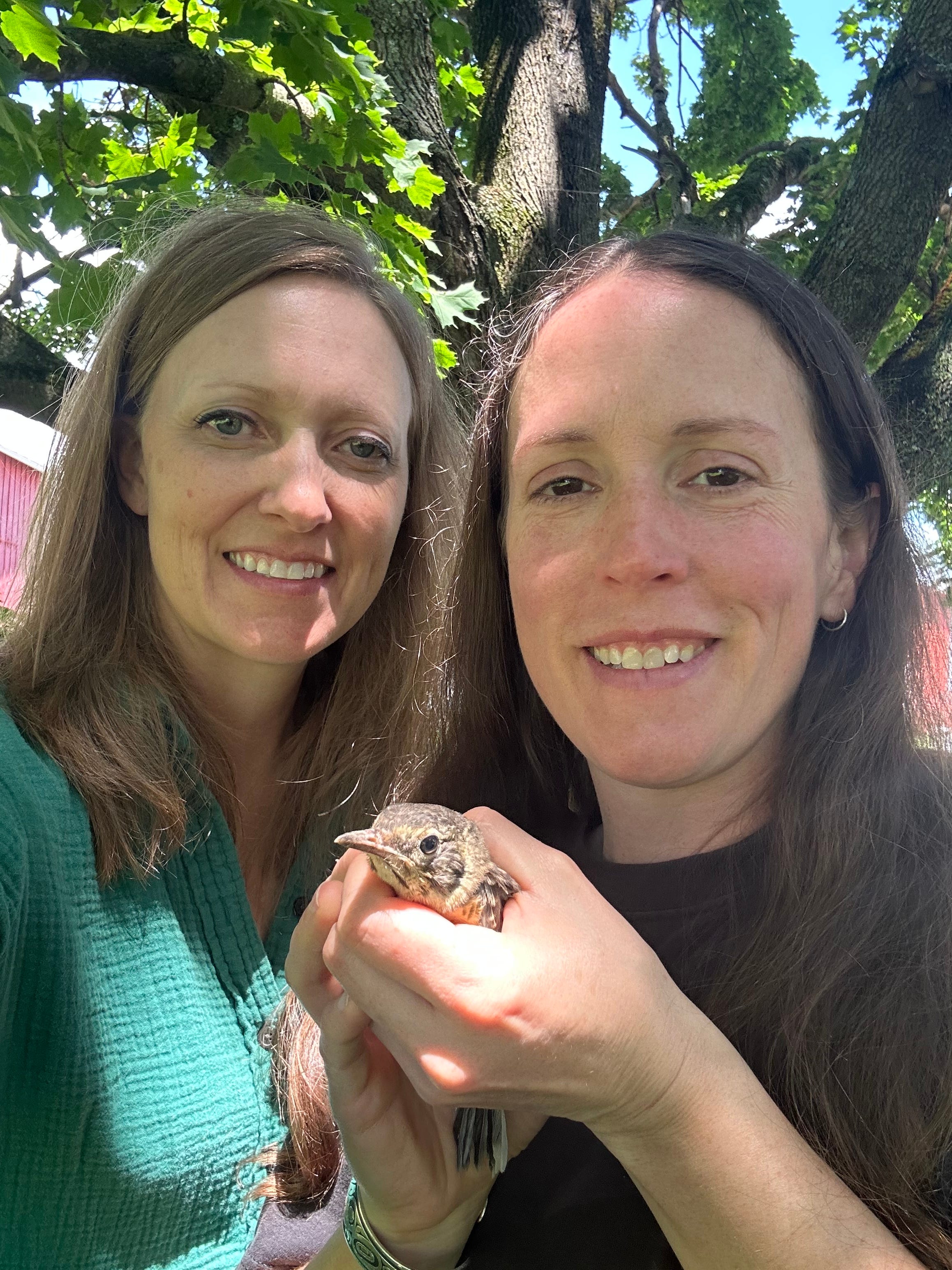
After this picture was taken we let him be free! It wasn’t quite as dramatic as I was anticipating. He just flew to the ground and hopped around, looked at us and then hopped around a little more. It was after that moment that I realized that this was going to be a slower departure.
Chip was very happy to be outside, and very confident in himself. Over the next week or so, he would fly over to the back door in the morning and ask for breakfast. In fact any time we went outside he would fly over and wait for food.
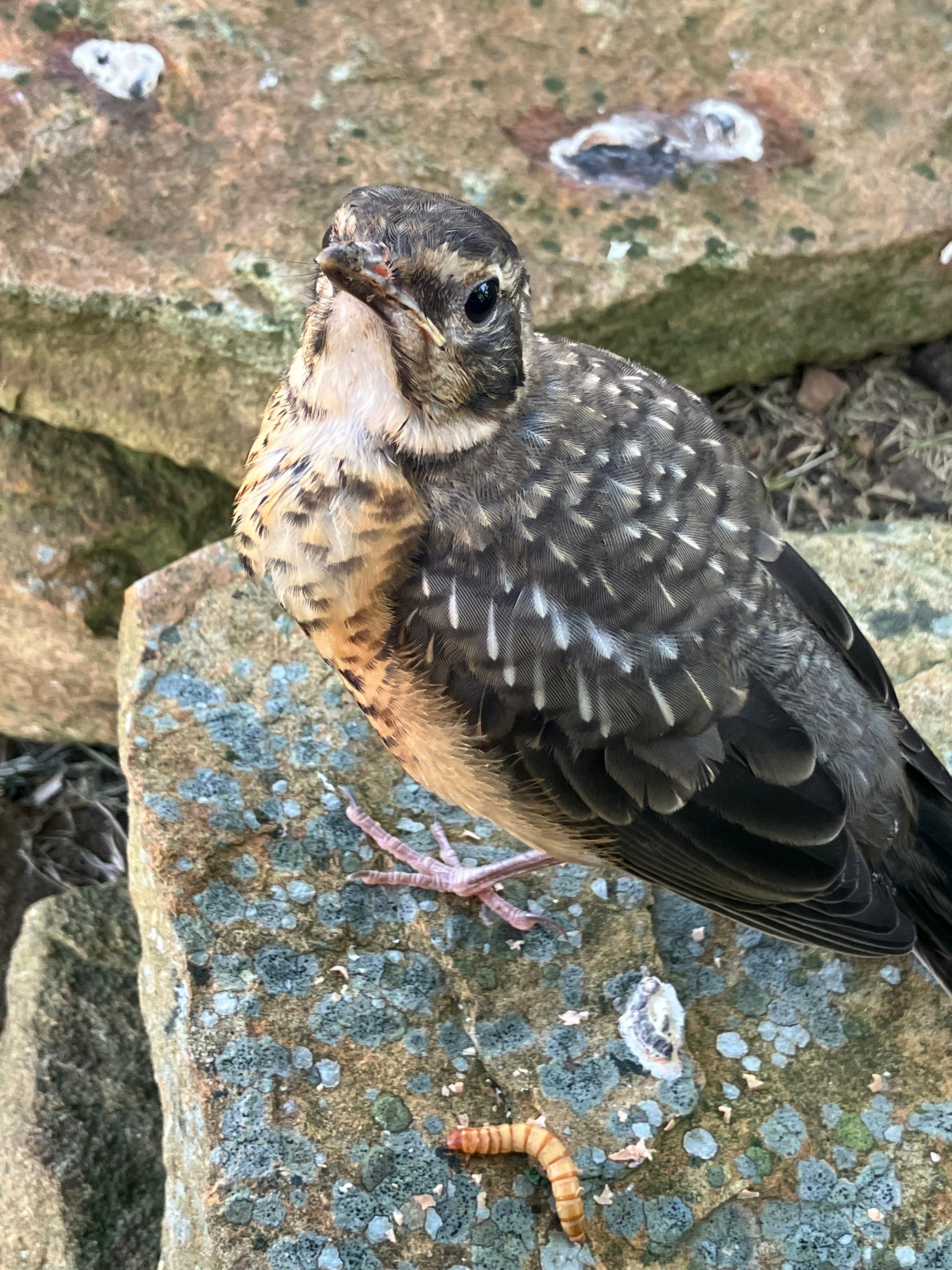
Really, we were just supporting him as he learned how to be an effective hunter, and he did and still does a fantastic job. I remember one morning while I dug in the garden, Chip flew over to me and closely observed me. He would stand at the edge of the freshly excavated soil and hone in on bugs that I didn’t even see until they were gone. Chip was a marvel.
There were other tender moments. During one of Chip’s first rainstorms, Tara saw him perched in a tree close to the house. She saw his little drenched body. He was looking at the back porch, seemingly unable to figure out what to do, and Tara went out in the storm to pick him up. Normally he would hop away, unwilling to be handled, but this time he let Tara pick him up and take him on the back porch, while he perched on her shoulder until the storm passed and his feathers were dry.
One other time, while I sat with him outside, I told him - “why don’t you sit on my leg? I promise I won’t touch you, and you can hop off when you feel like it.” To my surprise after sitting together for a few minutes, he hopped over to me and nuzzled his fuzzy body down on my thigh and closed his eyes. That is something I will never forget - the warmth and lightness of his small body, the tiny prickles of his claws poking through my flannel pants.
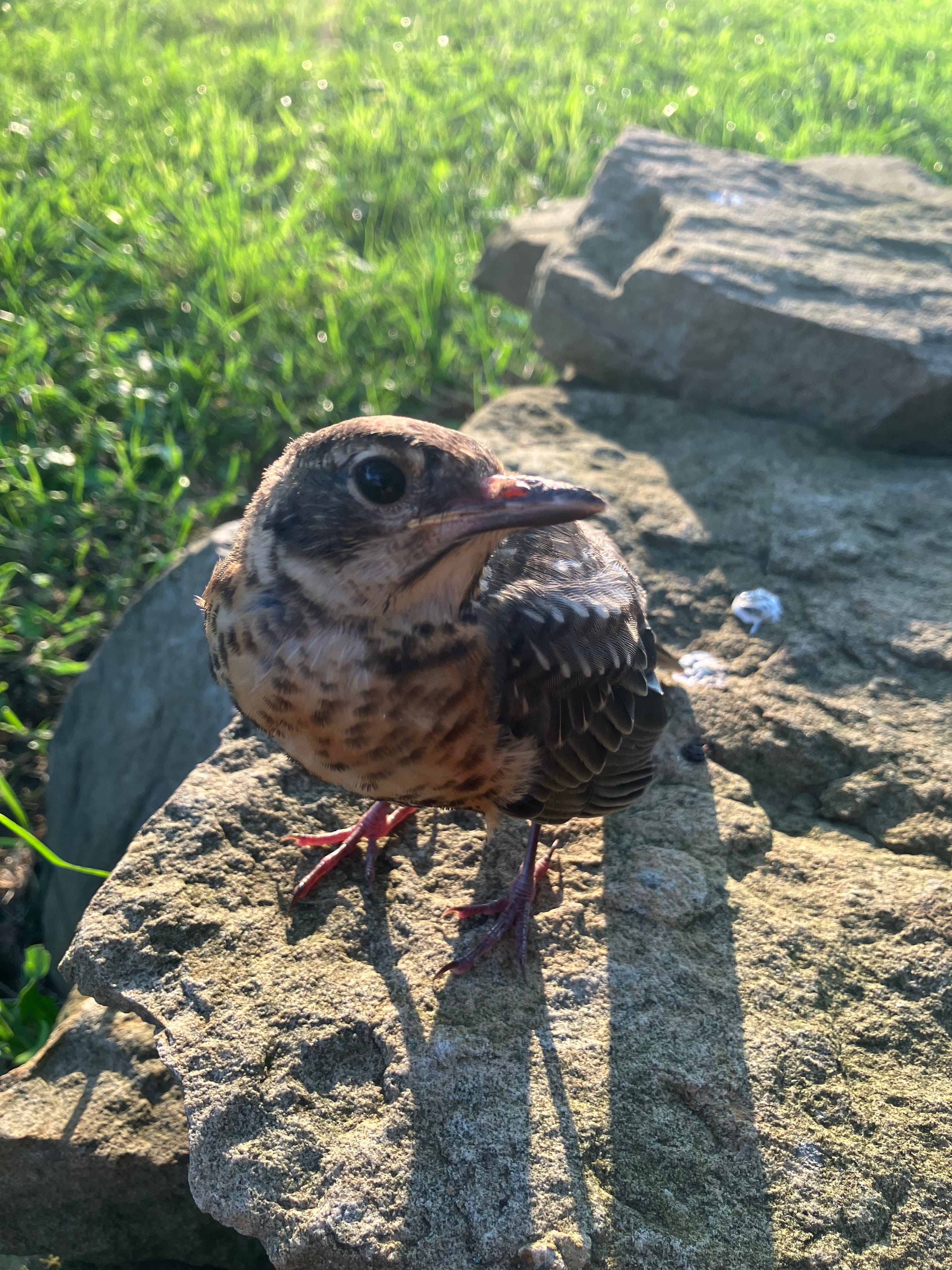
Since then we have seen him a few times here and there. We can recognize his distinct voice among the other bird calls, and know that he is okay. However difficult it might feel on this side of the divide, he no longer needs us, which is the best thing you could hope for as a parent. We did alright.
What a great rescue story Amy. Thank you for sharing it.
Cheers,
Michael